In modern hydraulic control system, servo valve, as a high-precision flow control element, is widely used in aerospace, industrial automation, robotics and other fields. Among them, rotary valve servo valve has attracted much attention because of its compact structure, fast response and high control accuracy. Its core working principle depends on the precise control of rotary mechanism. This paper will introduce the working mechanism of rotary mechanism in rotary valve servo valve in detail.
First, the basic structure of rotary valve servo valve
Rotary valve servo valve is mainly composed of rotary valve, fixed valve, electromagnetic torque motor, feedback mechanism and hydraulic oil circuit. Among them, the rotary valve, as a key component, is installed inside the fixed valve and can be rotated by the drive of electromagnetic torque. The core task of the rotary mechanism is to accurately control the deflection angle of the rotary valve according to the input signal, so as to adjust the flow and direction of hydraulic oil passing through the valve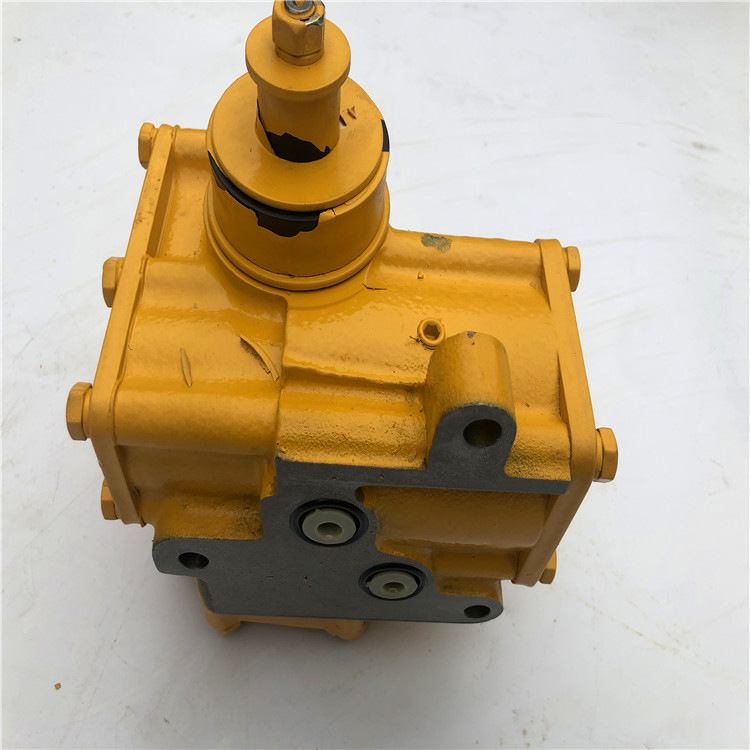 port.
port.
Second, the power source of the rotating mechanism
The power of rotating mechanism usually comes from electromagnetic torque motor. The motor consists of two coil windings and a magnet system. When the controller sends out an electrical signal, an electromagnetic field is generated in the coils, which interacts with the permanent magnet to form a rotating torque. This torque directly acts on the rotary valve connected to the output shaft of the motor, making it rotate.
Third, the control principle of rotation angle
The rotation angle of rotary valve determines the opening area of servo valve, and then controls the flow and pressure of hydraulic oil. In the working process, the system detects the actual position of the rotary valve in real time through a feedback device (such as potentiometer or encoder), and compares it with the target position to form a closed-loop control. If there is deviation, the controller will adjust the input current, change the electromagnetic torque and make the rotary valve return to the correct position. This closed-loop control mechanism ensures the response accuracy and stability of the rotating mechanism.
Fourth, the dynamic response of the rotating mechanism
Another key performance of the rotating mechanism is the dynamic response speed. Due to the small mass and low inertia of the rotary valve and the high-response electromagnetic torque motor, the rotary valve can quickly respond to the change of the input signal. This fast response is particularly important for high-precision motion control systems, such as aircraft rudder control, CNC machine tool servo system and other applications, which can significantly improve the dynamic performance and stability of the system.
V. Sealing and Lubrication of Rotating Mechanism
In the process of rotation, the sealing between the rotary valve and the fixed valve is very important. High-precision machining and special coating technology are usually adopted to reduce leakage and wear. At the same time, circulating lubrication system will be introduced into some servo valves to ensure that the rotating mechanism can still maintain a good lubrication state at high speed and prolong its service life.
VI. Summary
The rotary mechanism in rotary valve servo valve is not only the core of its control function, but also the key to realize high precision and high performance hydraulic control. Through electromagnetic torque drive, closed-loop feedback control and precision mechanical design, the rotating mechanism can respond to control instructions efficiently and stably, providing reliable power support for modern automation systems. With the continuous development of material science and control technology, the future rotary valve servo valve will achieve greater breakthroughs in response speed, energy efficiency and reliability.