Firstly, optimizing the structural design of servo valve is the key way to improve its dynamic characteristics. Traditional servo valves mostly adopt nozzle baffle or jet pipe structure, which has limitations in high frequency response and anti-pollution ability. In recent years, with the development of new materials and new technology, many high-performance servo valves begin to adopt force feedback, position feedback or electro-hydraulic compound feedback structure to improve the stability and response speed of the system. For example, using two-stage feedback structure can avoid system oscillation and improve dynamic performance while maintaining high gain.
Secondly, improving the manufacturing accuracy and assembly quality is also the basis for improving the dynamic characteristics of servo valves. The internal parts of servo valve, such as valve core, valve sleeve and torque motor, require extremely high machining accuracy, and micron-scale errors may lead to delayed response or unstable control. Therefore, the adoption of advanced precision machining equipment and automatic assembly technology can significantly improve the consistency and reliability of the servo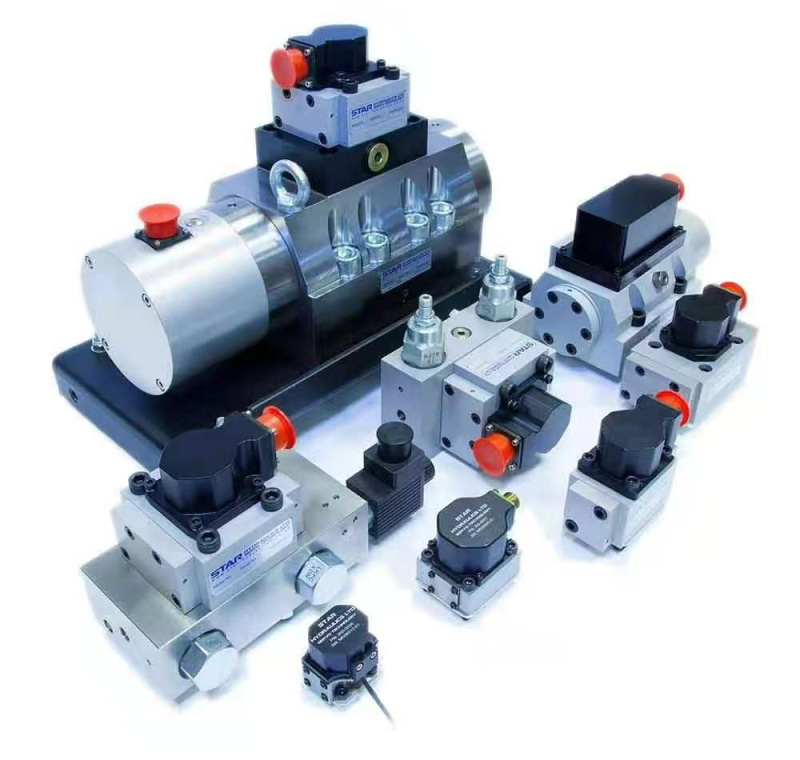 valve, thus improving its dynamic performance.
Thirdly, the closed-loop control of servo valve with advanced control strategy can effectively improve its dynamic response ability. Traditional PID control can’t meet the requirement of high precision in some complicated working conditions, but intelligent control methods such as adaptive control, fuzzy control and neural network control in modern control theory can adjust the control parameters in real time according to the system state, so that the servo valve can track the target signal more quickly and accurately, especially in the case of load change or external interference, which has better robustness and adaptability.
In addition, the upgrading of materials and processes is also an important direction to improve the dynamic performance of servo valves. For example, the electromagnetic response speed can be improved by using high permeability materials to make torque motors; The use of wear-resistant and high-temperature resistant new sealing materials can reduce friction resistance and improve the sensitivity of spool movement. At the same time, the corrosion resistance and fatigue life of parts can be improved by surface treatment technology, which can also prolong the service life of servo valve under high frequency operation.
Finally, the application of simulation and test technology also plays a vital role in the optimization of servo valve dynamic characteristics. With the help of advanced simulation software (such as AMESim, MATLAB/Simulink, etc.), the working state of the servo valve can be simulated in the design stage, its dynamic response characteristics can be predicted, and the design parameters can be continuously optimized through experimental tests. This not only improves the efficiency of research and development, but also helps to find potential dynamic performance bottlenecks.
To sum up, improving the dynamic characteristics of servo valve needs to start from structural design, manufacturing technology, control algorithm, material selection, testing and verification. With the continuous development of hydraulic control technology, the dynamic performance of servo valve will continue to improve, providing more accurate and efficient control guarantee for high-end equipment, aerospace, intelligent manufacturing and other fields.