First, the basic concept of fault-tolerant control
Fault-Tolerant Control, FTC) refers to a control strategy that can maintain the stable operation of the system and maintain a certain level of performance in the case of partial failure of the system. Fault-tolerant control is mainly divided into passive fault-tolerant and active fault-tolerant. Passive fault-tolerant control has a certain tolerance to known or unknown faults by designing a robust controller; Active fault tolerance depends on online fault detection and diagnosis (FDD) technology, and the control strategy is adjusted in real time according to the fault information.
Second, the servo valve fault types and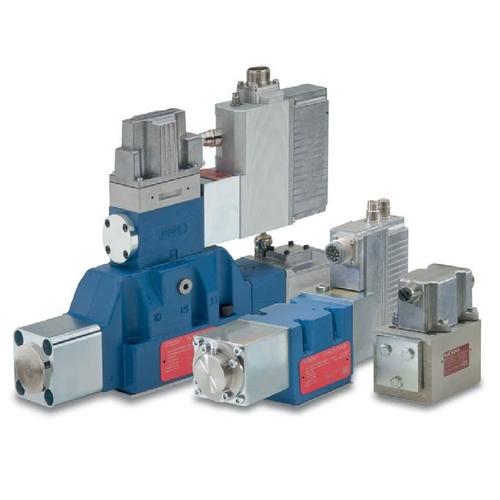 impact analysis
Common servo valve failures include: stuck spool, leakage, control signal failure, feedback sensor failure, etc. These faults will lead to inaccurate control flow, delayed response and even system out of control. Therefore, before designing the fault-tolerant controller, it is necessary to classify and model the possible faults of the servo valve, so as to provide the basis for the subsequent controller design.
Third, the design method of fault-tolerant control system
1. Model-based fault-tolerant control
The mathematical model of servo valve is used for fault detection and compensation. For example, the state observer is used to estimate the system state and fault signals, and the estimation results are fed back to the controller for compensation. Common observers include sliding mode observer (SMO) and extended Kalman filter (EKF).
2. Adaptive control method
Adaptive control can automatically adjust the controller parameters according to the changes of system parameters, which is suitable for the situation that the dynamic characteristics of servo valve change due to aging or environmental changes. For example, model reference adaptive control (MRAC) can dynamically adjust the control law according to the reference model.
3. Redundancy design and switching control
Hardware redundancy can be used in key systems, such as the parallel structure of double servo valves, and automatic switching can be realized with fault detection mechanism. At the same time, the reliability of the system is improved by combining switching control strategies such as logic threshold switching or fuzzy switching.
4. Fault-tolerant control based on artificial intelligence
With the development of artificial intelligence technology, neural network, fuzzy logic, deep learning and other methods are widely used in fault diagnosis and fault-tolerant control. These methods can deal with nonlinear and uncertain systems and are suitable for complex servo valve working environment.
Fourth, simulation and experimental verification
In order to verify the effectiveness of fault-tolerant control strategy, it is usually necessary to establish a simulation model of servo valve and carry out simulation test. Commonly used simulation tools include MATLAB/Simulink, AMESim, etc. On the basis of simulation experiments, physical tests are needed to verify the performance of the control strategy in the actual system.
V. Conclusion
With the continuous improvement of system reliability and safety requirements, the design of servo valve fault-tolerant control system has become an important research direction in modern control engineering. Through reasonable fault modeling, advanced control algorithm and intelligent fault diagnosis technology, the fault tolerance of servo system can be effectively improved and its stable operation under complex working conditions can be guaranteed.
In the future, with the development of artificial intelligence and digital twin technology, the fault-tolerant control of servo valve will develop in a smarter and more accurate direction, providing a more solid guarantee for high-reliability systems.