Slide valve servo valve is the core component of hydraulic servo control system, which is widely used in industrial control field with high precision and high response. As its key component, the spool directly determines the dynamic response, control accuracy and working stability of the servo valve. Therefore, the design of valve core plays an important role in the overall structural design of servo valve.
I. Basic functions and requirements of the valve core
The spool servo valve controls the flow and direction of hydraulic oil through the movement of the spool in the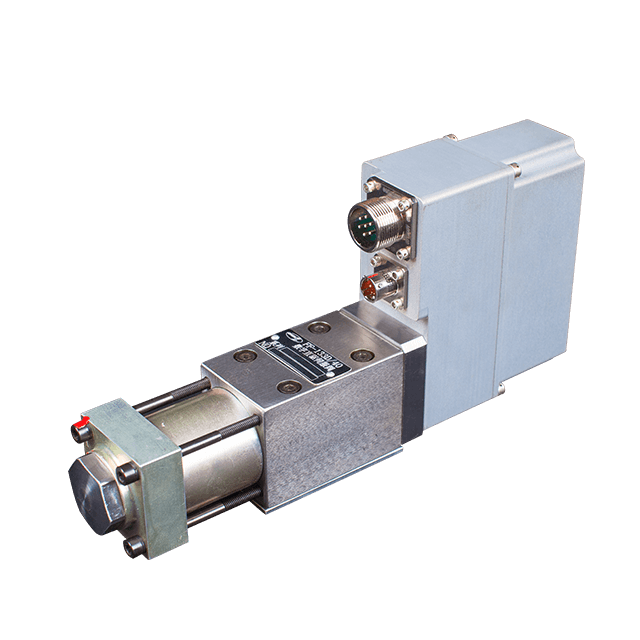 valve body, so as to realize the precise control of the actuator (such as hydraulic cylinder or hydraulic motor). The main functions of the valve core include:
-realize oil circuit switching and flow regulation;
-Ensure that the system responds quickly and sensitively;
-Maintain good sealing and dynamic stability;
-Good wear resistance and pollution resistance.
Therefore, the valve core must meet the following basic requirements when designing:
1. High geometric accuracy: The mating clearance between the valve core and the valve body must be very accurate, usually in micron level.
2. Good surface finish: to reduce friction loss and leakage.
3. Excellent material performance: high hardness, high wear resistance and certain corrosion resistance.
4. Reasonable structure: easy to process
 and assemble, and can adapt to high-frequency action.
Second, the key factors of valve core structure design
1. Design of throttle window
Throttle window is the key part of the valve core to control the oil flow. Its shape, size and distribution directly affect the static characteristics (such as flow gain) and dynamic characteristics (such as frequency response) of servo valves. The common forms of throttle window are rectangle, triangle and V-shape, and different shapes are suitable for different control requirements. For example, the V-shaped window can realize linear flow output, which is suitable for high-precision control occasions.
2. Design of valve core step and shoulder
The valve core usually consists of multiple steps, and each step corresponds to a different oil port control. Reasonable design of the length and width of the step can ensure the accuracy of the opening and closing state of each oil port when the valve core is in different positions, and avoid “dead zone” or “overlapping zone”, thus improving the control accuracy.
3. Symmetry and balance
In order to reduce the unbalanced force of the valve core in the working process, symmetrical structure design is often adopted. For example, the symmetrical arrangement of double-ended throttle windows can effectively offset the influence of hydraulic force on the valve core and improve its dynamic stability.
4. Leakage control and sealing
The small gap between the valve core and the valve body is not only the basis of flow control, but also the main cause of leakage. In the design, factors such as working pressure and oil viscosity should be considered comprehensively, and the leakage should be minimized on the premise of ensuring sensitivity.
Third, material selection and surface treatment
The valve core is usually made of high carbon alloy steel or stainless steel, and its hardness and wear resistance are improved by heat treatment (such as quenching and nitriding). In addition, in order to enhance corrosion resistance, surface treatment processes such as chromium plating and electroless nickel plating are often carried out. In some special working conditions, new materials such as ceramic coating can be used to improve the performance.
Four, machining and assembly precision control
The machining accuracy of the valve core directly affects its performance. High-precision grinding and grinding process is the premise of manufacturing high-performance valve core. During the assembly process, it is necessary to ensure that the valve core can slide freely in the valve body without being stuck, and at the same time maintain good sealing performance. Therefore, strict process control and detection means (such as pneumatic measurement and laser interferometry) are essential.
V. Conclusion
To sum up, the design of spool of spool servo valve is a systematic project, involving structural design, material selection, precision machining and assembly. With the continuous development of hydraulic servo technology, the performance requirements of the valve core are also increasing. In the future, the valve core design will pay more attention to intelligence, modularity and high reliability to meet the complex and changeable engineering application requirements.