As a key control component in hydraulic system, servo valve is widely used in aerospace, industrial automation, construction machinery and other fields. Its core function is to convert tiny electrical signals into high-precision hydraulic output and realize precise control of the actuator. Because of the complex working environment, high pressure and impurities in the medium, the servo valve is easily affected by wear in long-term operation, which leads to performance degradation or even failure. Therefore, how to improve the wear resistance of servo valve has become an important topic in design and manufacture.
First of all, material selection is the basis of improving wear resistance. The internal key components of servo valves, such as valve core and valve sleeve, are usually made of high-strength and high-hardness alloy steel or stainless steel to enhance their wear resistance. In addition, the surface treatment technologies widely used in recent years, such as electroless nickel plating, nitriding, carbonitriding and physical vapor deposition (PVD), can significantly improve the hardness and wear resistance of the parts surface. For example, through nitriding treatment, a hard nitride layer can be formed on the surface of the valve core, effectively reducing friction and wear.
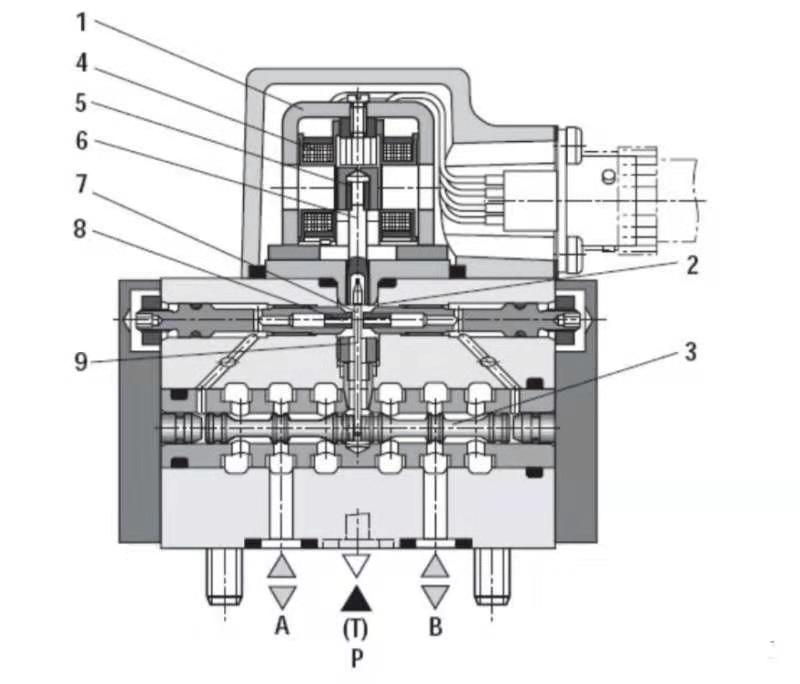
Secondly, structural optimization design plays an important role in reducing wear. Modern servo valve adopts high-precision clearance fit design to reduce the clearance between the valve core and the valve body, which can not only improve the control accuracy, but also reduce the chance of impurities entering the friction surface, thus reducing the risk of wear. At the same time, by introducing fluid mechanics simulation technology to optimize the design of internal flow passage, the wear problem caused by fluid impact and turbulence can be reduced.
Thirdly, a good lubrication and filtration system is the key to
 ensure the long-term stable operation of the servo valve. Hydraulic oil is not only the medium of power transmission, but also plays a lubricating role. Selecting hydraulic oil with proper viscosity and strong oxidation resistance and replacing
 and maintaining it regularly can effectively reduce the dry friction between moving parts. At the same time, it is also an important means to prevent abrasive wear by installing a high-precision oil filter in the system and regularly removing metal debris and particulate impurities from the oil.
Finally, the use and maintenance of science can not be ignored. Users should use servo valves in strict accordance with operating specifications to avoid frequent overload operation. At the same time, the service life of the servo valve can be effectively prolonged by detecting the working state of the servo valve regularly and finding and handling the abnormal situation in time.
To sum up, the improvement of wear resistance of servo valve needs to be considered comprehensively from many aspects such as material selection, structure optimization, lubrication protection and daily maintenance. Only by paying attention to details in the whole process of design, manufacture and use can the servo valve run stably and reliably under complex working conditions, thus improving the efficiency and safety of the whole hydraulic system.