As the core component of hydraulic control system, servo valve is widely used in automatic control system with high precision and high response. Among them, the two-way servo valve plays an important role in industrial automation, aerospace, robotics and other fields. It can accurately control the movement direction, speed and position of hydraulic cylinder or hydraulic motor according to the change of input signal. This paper will discuss its working principle, structural characteristics and realization mode around the theme of “how to realize the commutation of two-way servo valve”
First, the basic working principle of servo valve
Servo valve is a high-precision control valve that controls the flow and direction of hydraulic oil through electrical signals. Its core lies in controlling the flow direction and flow rate of hydraulic oil by driving the valve core through a torque motor or a proportional electromagnet. Usually, servo valve is composed of electro-mechanical converter, hydraulic amplifier stage and feedback mechanism, which has the advantages of fast response and high control accuracy.
The key of two-way servo valve is to realize the forward and reverse movement of hydraulic actuator, which requires the servo valve to have reversing ability, that is, to control the output of hydraulic oil from different channels according to different input signals.
Second, the structural characteristics of two-way servo valve
Typical two-way servo valve usually adopts slide valve structure, which contains a valve core that can move left and right. Driven by electromagnetic force, the valve core can slide in the valve body, thus changing the connection relationship between the oil inlet and the oil outlet. When the input signal is positive, the valve core moves to the right, so that the pressure oil enters one side of the actuator; When the signal is negative, the valve core moves to the left, changing the flow direction of the oil, thus realizing the reverse movement of the actuator.
There is also a feedback device inside the servo valve, such as a displacement sensor (LVDT) or a mechanical feedback rod, which is used to feed back the actual position of the spool to the control system to form a closed-loop control, thus improving the control accuracy and stability.
Third, the reversing process of the two-way servo valve
The reversing process is the key link of the two-way servo valve. Its realization mainly depends on the following steps:
1. Signal input: The control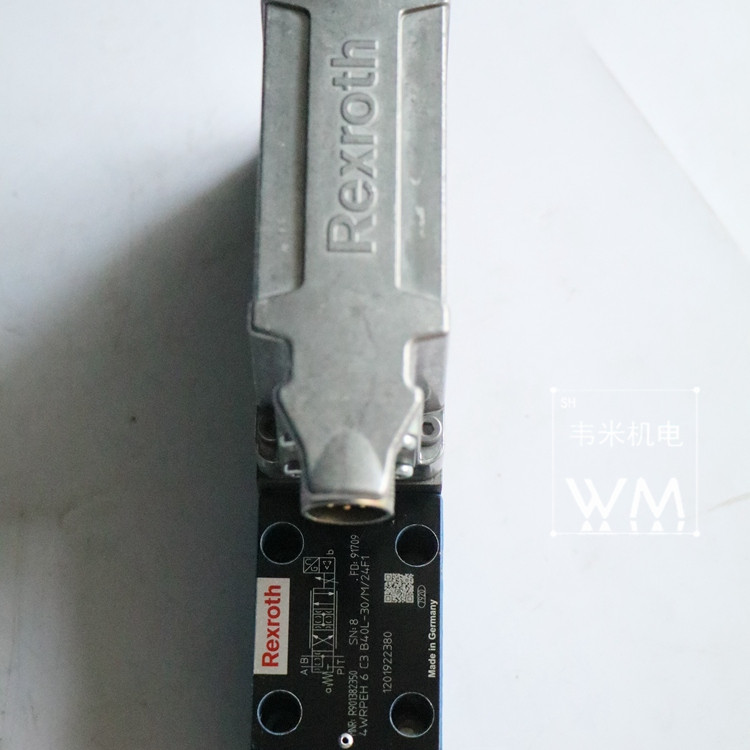 system outputs an analog or digital control signal to the servo amplifier according to the change of the target position or speed.
2. Signal processing and amplification: the servo amplifier amplifies the weak control signal and drives the electromagnetic coil of the servo valve.
3. Valve core movement: under the action of electromagnetic force, the valve core is displaced to open the corresponding oil channel.
4. Change of hydraulic oil flow direction: With the movement of the valve core, high-pressure oil is guided to different cavities of the actuator, thus pushing the piston of the hydraulic cylinder or the rotor of the motor to move in the opposite direction.
5. Feedback adjustment: The system detects the actual position of the valve core through the feedback device, and constantly adjusts the input signal to ensure the accuracy and stability of the reversing action.
Iv. factors affecting commutation performance
1. Response speed: The response time of the servo valve to the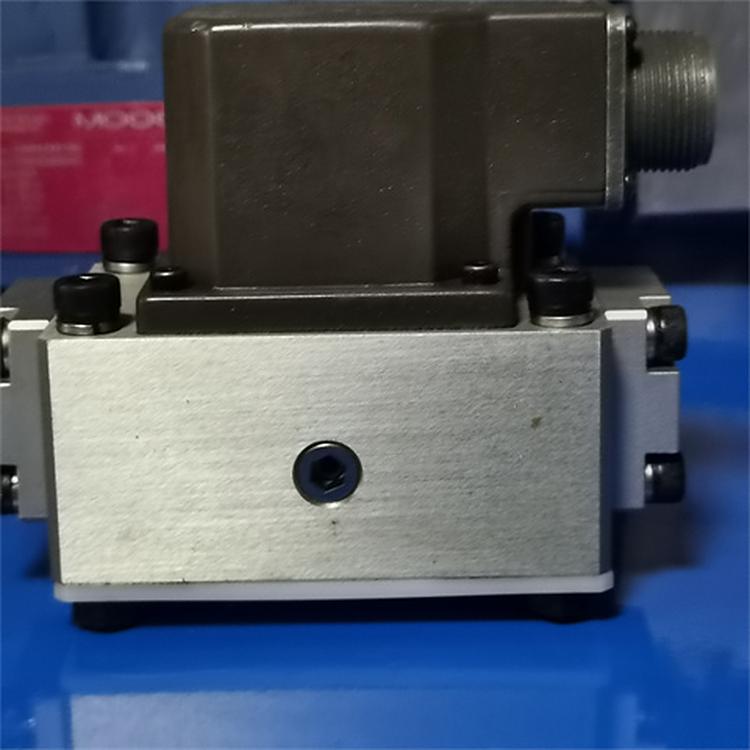 input signal determines the rapidity of commutation, which usually depends on the performance of the electromagnetic drive system.
2. Control accuracy: The accuracy of closed-loop feedback system directly affects the accuracy of commutation.
3. Cleanliness of hydraulic oil: impurities may cause the valve core to stick and affect the reliability of reversing action.
4. Temperature change: High temperature or low temperature may cause the viscosity change of hydraulic oil, and then affect the dynamic performance of the valve core.
V. Application examples
In CNC machine tools, two-way servo valves are often used to control the feed direction and speed of the spindle; In the flight control system, it is used to adjust the position of the rudder surface; In the field of robots, it is used to drive the flexible movement of joints. These applications all depend on the servo valve to realize the reversing function quickly and accurately.
VI. Conclusion
To sum up, the reversing function of the two-way servo valve is realized by driving the spool to move through the electric control signal, thus changing the flow direction of hydraulic oil. Its core lies in precise control and stable feedback mechanism. With the continuous development of control technology and hydraulic components, two-way servo valve will play an increasingly important role in higher precision and higher speed applications.