As the core control component of hydraulic servo system, servo valve is widely used in high-precision and high-response industrial equipment and aerospace fields. Among them, single-stage servo valve has been widely used in occasions with moderate control accuracy because of its simple structure, fast response speed and low cost. In this paper, the design principle, key parameters, structure composition and design steps of single-stage servo valve will be described in detail.
First, the basic principle of single-stage servo valve
Single-stage servo valve is an electro-hydraulic conversion device that converts electrical signals into hydraulic signals. Usually, the electromagnetic torque motor (or proportional electromagnet) directly drives the spool to control the flow and direction of hydraulic oil. Compared with the multi-stage servo valve, it has no pilot stage amplification structure, so the response speed is faster, but the anti-pollution ability and control accuracy are relatively low.
The basic working principle is that when the input current signal acts on the electromagnetic coil, it generates electromagnetic force to drive the valve core to move, thus changing the opening of the valve port, adjusting the flow and direction of hydraulic oil, and realizing accurate control of the actuator (such as hydraulic cylinder or hydraulic motor).
Second, the key design parameters
When designing a single-stage servo valve, the following parameters should be considered:
1. Flow range: determine the maximum flow of the valve according to the system requirements.
2. Pressure grade: including rated working pressure and maximum pressure resistance.
3. Response time: determines the dynamic performance of the system.
4. Control accuracy: including hysteresis, linearity and other indicators.
5. Power consumption: it affects the energy efficiency and heat generation of the system.
6. Working medium and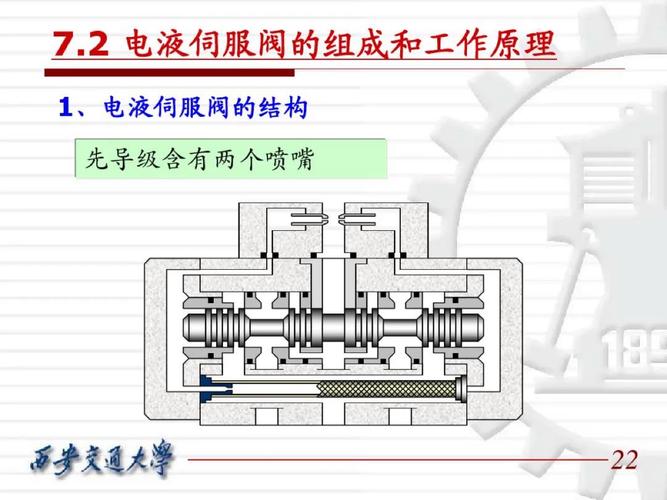 environment: such as temperature, viscosity, cleanliness, etc.
Iii. Key points of structural design
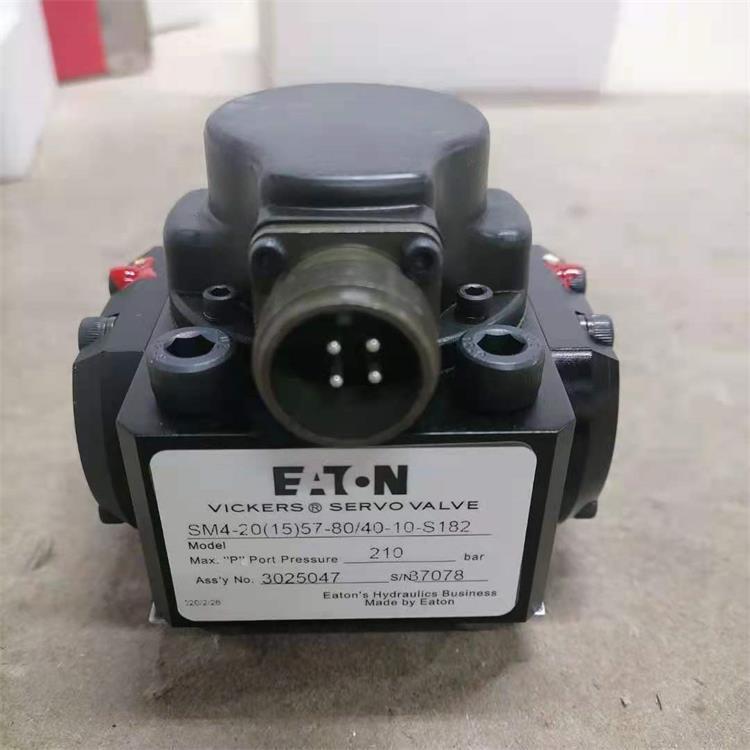
A typical single-stage servo valve is mainly composed of the following parts:
-Electromagnetic drive part: moving coil or moving iron structure is often used, and its performance directly affects the response speed and control stability of the valve.
-Valve core and valve body: It requires high machining accuracy and good sealing performance, and is usually made of stainless steel or quenched alloy steel.
-Feedback mechanism: it can be mechanical feedback or electrical feedback to improve the stability and accuracy of control.
-Shell and connection interface: it shall meet the system connection standards, such as SAE and ISO.
When designing, we should ensure the coordination among the components, especially the dynamic matching relationship between the electromagnetic drive part and the valve core.
Fourth, the design process
1. Demand analysis: define usage scenarios, load characteristics, control requirements, etc.
2. Scheme selection: select the appropriate electromagnetic drive form, valve core structure and control mode.
3. Dynamic modeling and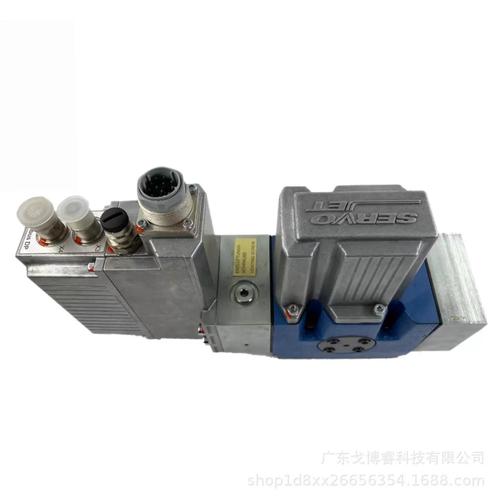 simulation: the system model is
 established by simulation software (such as MATLAB/Simulink and AMESim) to predict the performance.
4. Structural design and optimization: detailed parts design, strength check, flow field analysis, etc.
5. Prototype manufacturing and testing: the prototype is processed according to the design drawings, and the static and dynamic performance tests are carried out.
6. Improvement and finalization: Optimize the design scheme according to the test results, and finally determine the product parameters.
V. Summary
Although the structure of single-stage servo valve is relatively simple, its design still needs to give consideration to control performance, reliability and economy. With the continuous development of hydraulic servo technology, single-stage servo valve has broad application prospects in intelligent manufacturing, automation equipment and other fields. Through reasonable design and optimization, high-performance and low-cost hydraulic control solutions can be realized to meet diversified engineering requirements.
—
references
[1] Wang Chunxing. Hydraulic servo control system [M]. Machinery Industry Press, 2010.
[2] Wang Jiwei. Hydraulic transmission [M]. Machinery Industry Press, 2014.
[3] H. E. Merritt. Hydraulic Control Systems, Wiley, 1967.