In modern industrial automation system, fluid control technology plays a vital role. Especially when high-precision flow regulation is needed, the traditional manual or ordinary electric control mode has been difficult to meet the increasing requirements of control accuracy and response speed. As a high-precision and programmable driving device, servo motor has been widely used in ball valve flow control in recent years and has become an important means to realize intelligent and automatic fluid control.
First, the basic principle of servo motor and ball valve
Servo motor is a closed-loop controlled electric actuator, which has the advantages of fast response, high positioning accuracy and accurate control of rotation angle and speed. It usually consists of a motor body, an encoder and a controller, and can adjust the output angle in real time according to the control signal.
Ball valve is a kind of valve with spherical opening and closing parts, which can be fully opened or closed by rotating 90 degrees. The traditional ball valve is mainly used for on-off control, but if the ball of the ball valve is designed as a V-shaped or partially spherical structure, and the angle is adjusted with the servo motor, the continuous control of fluid flow can be realized.
Second, the advantages of servo motor control ball valve
1. Precise control: The high-resolution encoder of the servo motor can achieve an angle control accuracy of 0.1 degree, thus realizing fine adjustment of the flow.
2. Fast dynamic response: Compared with the traditional pneumatic or hydraulic actuators, the servo motor can start and stop more quickly, which is suitable for occasions requiring rapid response.
3. strong programmability: through PLC or industrial control software, the opening curve of the valve can be set flexibly to realize complex flow control strategy.
4. Energy saving and environmental protection: the servo control system has low power consumption when maintaining the position, and does not need continuous energy supply, so the energy saving effect is remarkable.
Third, the application field
Servo motor is widely used for ball valve flow control in the following fields:
-Water treatment system: used to control the inflow and outflow, and realize constant current control.
-Chemical process control: high-precision adjustment of medium flow in reaction kettle, pipeline transportation and other links.
-Heating, ventilation and air conditioning (HVAC): used to adjust the hot or cold water flow and improve the temperature control accuracy.
-Food and pharmaceutical industry: meet the requirements of high precision and aseptic control in clean fluid transmission.
Four, the system design and implementation points
A typical servo motor driven ball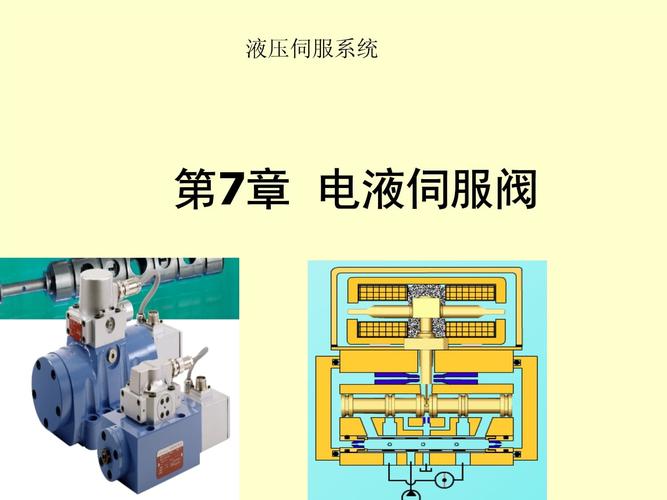 valve flow control system includes:
-Servo motor: according to the torque and speed requirements;
-Controller: responsible for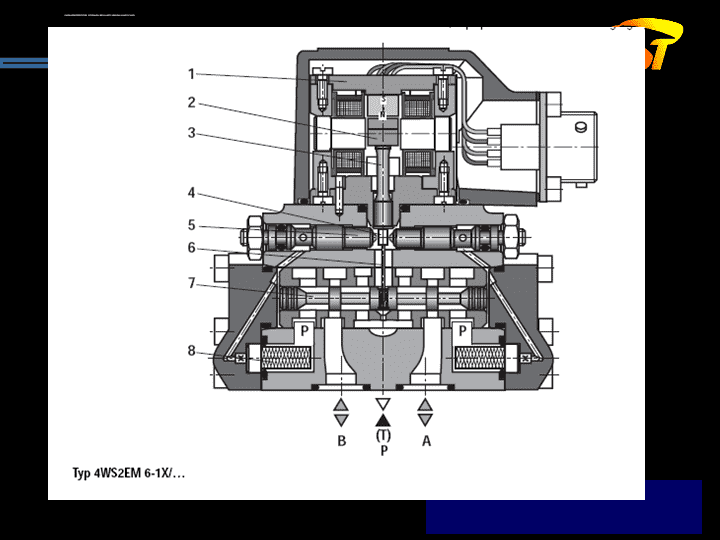 receiving the flow setting signal and controlling the motor to rotate;
-Flow sensor: feedback the actual flow to form closed-loop control;
-Communication interface: supports industrial communication protocols such as Modbus, CAN and Profinet.
In system design, factors such as valve characteristics, fluid properties and control accuracy requirements should be considered, and control algorithms (such as PID) should be reasonably configured to achieve stable and efficient flow regulation.
tag
With the continuous improvement of industrial automation level, servo motor has a broad application prospect in ball valve flow control. It not only improves the control accuracy and system response speed, but also provides a solid technical foundation for the realization of intelligent factories. In the future, combined with new technologies such as Internet of Things and artificial intelligence, servo motor-driven ball valves will play an important role in more high-precision and complex control scenarios.