First, the causes of multivariable coupling of servo valve
In multi-channel servo valve, there are usually many control variables, such as main spool displacement, pilot stage pressure, flow rate and pressure control variables. These variables will affect each other in the dynamic process: for example, when adjusting the flow rate, it may cause the change of system pressure; And the change of pressure may react on the flow control loop, forming coupling. This coupling relationship is especially obvious in the nonlinear model, which increases the difficulty of controller design.
Second, the basic principle of decoupling
The goal of decoupling control is to make the output variables of the system only affected by the corresponding input variables by designing control strategies, thus eliminating the mutual interference between variables. The methods to realize decoupling mainly include:
1. Feedforward compensation method: According to the system model, a feedforward compensator is designed to directly offset the known coupling term, which is suitable for situations where the model is more accurate.
2. Feedback decoupling method: using state feedback or observer technology, the system input is reconstructed, making the transfer function matrix of closed-loop system diagonal.
3. Decoupling control algorithm: for example, intelligent control methods based on inverse system method, adaptive control or neural network can adapt to the change of system parameters and nonlinear characteristics.
Third, common decoupling strategies
1. Linear decoupling control: Based on the linear servo valve model, approximate processing is carried out near the working point, and the decoupling controller is designed through matrix operation. Suitable for small-scale dynamic change scenes.
2. Nonlinear decoupling control: the nonlinear system is transformed into a linear decoupling system by using differential geometry theory or feedback linearization method. This method is suitable for large-scale systems with high dynamic response requirements.
3. Robust and adaptive decoupling: combining robust control and adaptive mechanism, it has strong adaptability to parameter uncertainty and external disturbance, and is suitable for servo valve control under complex working conditions.
Fourth, engineering applications and challenges
Although decoupling control is mature in theory, it still faces many challenges in practical application. For example, modeling error, sensor noise, actuator nonlinearity and other factors will affect the decoupling effect. In addition, the design of decoupling controller often depends on the accurate model of the system, and the servo valve system itself has strong nonlinear and time-varying characteristics, which increases the difficulty of obtaining the model.
In order to solve these problems, in recent years, researchers have tried to introduce artificial intelligence technology into decoupling control, such as fuzzy control, neural network and deep learning, in order to realize online identification and dynamic adjustment of complex coupling relations, thus improving the adaptability and control accuracy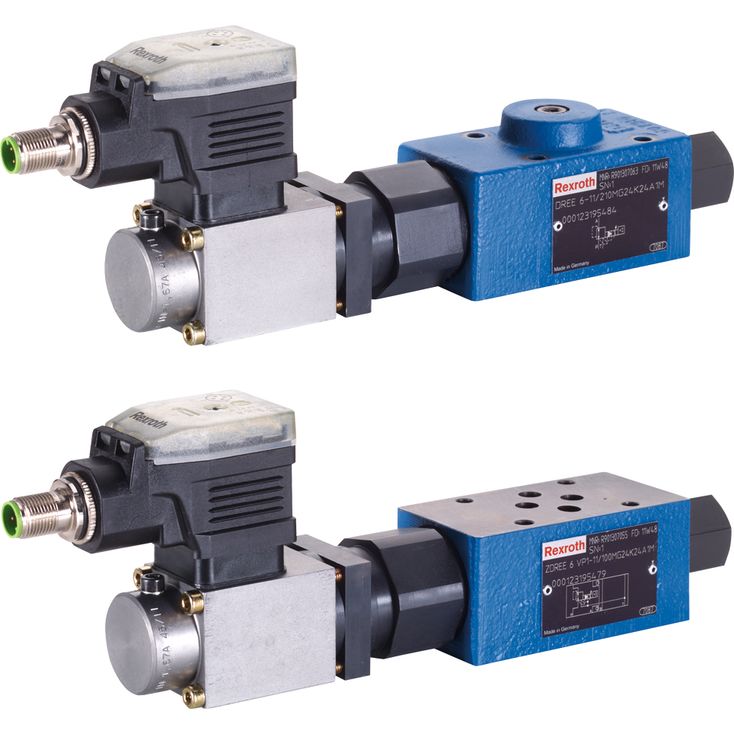 of the system.
tag
To sum up, the decoupling problem of servo valve multivariable system is the key link to improve the performance of hydraulic control system. By reasonably selecting decoupling method and combining with advanced control theory and technical means, the coupling interference between variables can be significantly reduced and the dynamic response and stability of the system can be improved. With the development of intelligent control technology in the future, the decoupling control of servo valve will develop in a more efficient, adaptive and intelligent direction.